Unsure of something? We can help with that!

Here are 60 of our most Frequently Asked Questions

1. General Information & Product Overview

What types of underfloor heating systems do you sell?

We offer both electric and water-based (hydronic) systems, suitable for different project types and floor areas.

Which system is right for my home?

Electric underfloor heating systems suit renovations and small rooms; water underfloor heating systems work better for new builds and large areas.

What flooring types are compatible with your systems?

Our underfloor heating products work with tiles, stone, laminate, wood, carpet, and vinyl floor finishes.

Is underfloor heating safe?

Yes. Our products meet all safety standards and offer safe, even heating without exposed hot surfaces.

Can I use underfloor heating as my main heating source?

Yes, especially in well-insulated homes where underfloor heating systems can replace or supplement radiators.

Are your systems compatible with building regulations?

All systems comply with UK Building Regulations when professionally installed.

Are your products suitable for commercial use?

We supply scalable underfloor heating systems for offices, retail, and hospitality with durability for heavy use.

Is underfloor heating child and pet safe?

Yes, it provides gentle, safe warmth with no hot radiators or sharp edges.

2. Installation & Compatibility

Do your kits include everything I need for installation?

Yes. Our underfloor heating kits include all heating elements, thermostats, insulation, fixings, and instructions required.

Can I install it myself?

Our systems are DIY-friendly, but final electrical or plumbing work should be done by qualified professionals.

Do I need insulation boards?

Although not essential, insulation improves heat-up times and energy efficiency.

Can I lay the heating directly on my existing floor?

Yes you can, however it’s best to install insulation first for better efficiency; cables or mats can be laid on wood or concrete subfloors.

Can underfloor heating be installed upstairs?

Yes. We offer both water and electric underfloor heating systems that can be used upstairs - one option for water systems in new builds is our chipboard deck with grooves in to hold the pipe - meaning you don't need to put down floor boards or standard floor deck.

Will underfloor heating raise my floor height?

Yes, but the increase is minimal and varies by system type. For electric underfloor it can be as low as 4mm and water retrofit systems as low as 15mm.

What adhesive should I use for insulation boards?

This depends on the type of insulation so follow our product guides for each type of insulation board. But generally this will be either spray adhesive or flexible, fast-setting tile adhesive applied as per our installation manuals.

Can I cut the heating cables or mats to fit?

Never cut the heating cables; you may trim mesh on mats, but not the cable itself.

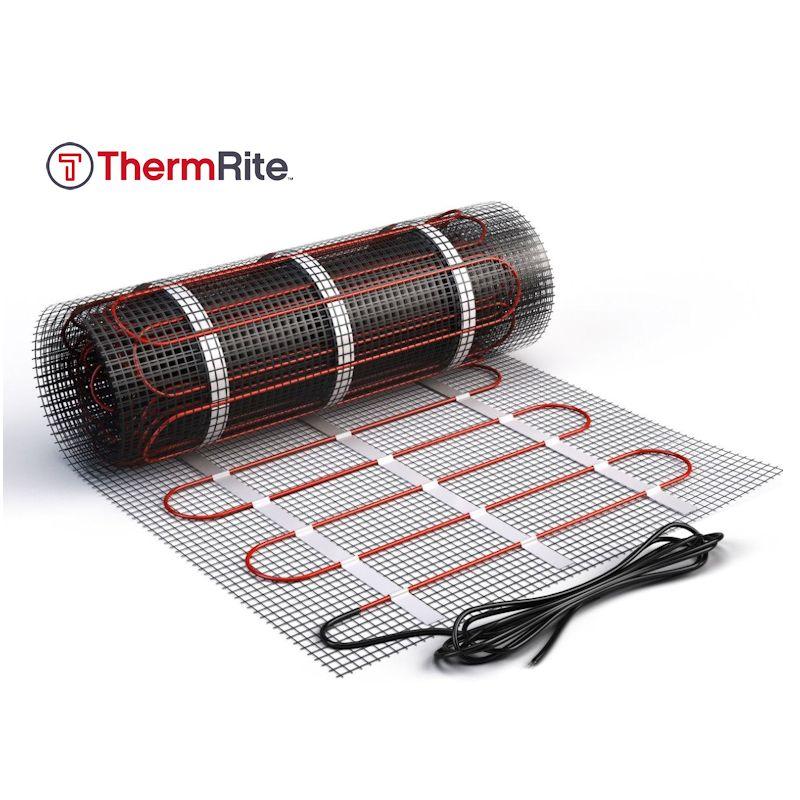
What’s the difference between heating mats and loose cable kits?

Mats have cables pre-attached at a set spacing for easy install (just roll out the mat); loose cables get rolled out and taped into position and offer more flexibility in complex layouts.

What’s the difference between in-screed and surface-mounted water systems?

In-screed pipes embed in the new screed/concrete floor (new builds); surface-mounted pipes sit on top of the existing floor for retrofit underfloor heating systems.

Can I use underfloor heating in bathrooms or wet rooms?

Yes, our cable mats, loose cables and pipe systems are designed for moisture-prone areas. The thermostats however are installed outside the bathroom and a sensor then installed within the bathroom to monitor temperature and feed this back to the thermostat.

Can I use rugs or mats on top of underfloor heating?

Yes, but best to choose low-tog rugs to allow the transfer of heat.

3. Operation & Performance

How energy-efficient is underfloor heating

Underfloor heating operates at lower temperatures and evenly distributes heat, saving up to 25% energy compared to radiators.

How long does the floor take to heat up

With insulation: 15–30 minutes; without: up to 1–2 hours.

How hot will the floor get?

Typically between 26–28°C, providing comfortable warmth. The floor temperature can be controlled by the thermostats floor probe to ensure it does not get too hot.

Will underfloor heating dry out wood or laminate floors?

Not if installed with proper temperature controls and compatible flooring.

Can I zone different areas of my home with underfloor heating?

Yes, multiple thermostats or controllers allow independent zone control.

How do I control multiple heating zones?

Install a thermostat into each zone, or smart control systems with apps such as our Heatmiser NeoStat thermostat range.

Can underfloor heating be used with solar panels or heat pumps?

Yes, especially water systems designed for low-temp heat sources. Underfloor heating combined with a heat pump is the perfect combination for a highly efficient, enviromentally friendly heating solution.

Will underfloor heating affect my property’s resale value?

Generally positively—seen as a modern, energy-efficient upgrade.

Can I use underfloor heating in a conservatory or sunroom?

Yes, it helps eliminate cold spots and improves comfort.

How long does installation take?

Small electric kits: 1–2 hours; water systems: 1-2 days plus drying; overlay panels offer a faster install solution.

4. Technical & Maintenance

What happens if the heating system stops working?

Check thermostat and power first; contact support for diagnostics or professional help.

Do you offer technical support after purchase?

Yes, of course we are here to assist you both before and after sale. You can phone, or email, or we also have installation manuals online. If you need assistance at anytime our team are here to assist.

How do I test the system before tiling or flooring?

Electric systems: use a multimeter for resistance and continuity; water systems: pressure test pipes. All details are in the product manuals supplied with each system.

Do your systems come with warranties?

Yes. Electric elements typically have lifetime; thermostats 2 years; water systems up to 50 years.

Is maintenance required?

No regular maintenance needed; systems are designed for longevity.

Can I expand my system later?

Yes, systems are modular and can be extended with additional zones.

5. Purchasing & Customer Service

What’s the lead time for delivery?

Next-working-day delivery available on most products when ordered before cut-off time.

Do you provide custom kits for awkward-shaped rooms?

Yes, send us a floor plan for a tailored layout and quote, or submit plans to: design@tfhw.co.uk

Do you offer trade discounts or wholesale pricing?

Yes, trade accounts and discounts are available for contractors.

Is VAT included in your prices?

Two prices are shown next to each product, including and also excluding VAT so you can see both prices.

Can I return unused products?

Yes. We comply fully with the “Consumer Rights Act” and therefore as long as your return request complies with the requirements which are also listed in our T's&C's, we will indeed accept your return.

Do you offer professional installation services?

We can include underfloor heating design & technical installation help, but do not provide direct installation.

Can underfloor heating be installed in rental properties?

Yes, especially electric systems, as they are low maintenance and non-invasive.

Will underfloor heating work with existing radiators?

Yes, hybrid systems can share a heat source with separate controls.

How do I calculate how much heating I need?

Send your floor plans or room measurements to design@tfhw.co.uk and we can do this for you.

6. Advanced Topics & Troubleshooting

How environmentally friendly is underfloor heating?

Underfloor heating is energy-efficient and can reduce carbon emissions when paired with renewable energy sources like heat pumps or solar panels.

Can underfloor heating cause floors to crack or warp?

No. When installed properly with compatible flooring and temperature controls, underfloor heating should not cause damage.

What is the lifespan of the thermostat?

Most thermostats last at least 10-15 years and longer, and smart thermostats may receive updates and support for even longer. All thermostats have guarantees provided by their manufacturer.

Can I integrate underfloor heating with home automation systems?

Yes, most of our WiFi-enabled thermostats work with Alexa, Google Home, and other smart home platforms.

What happens if there is a leak in a water-based system?

Leaks are rare when installed correctly and due to our aluminium core multi-layer pipes would only occur if the pipe is damaged during or after installation. But if pipes are damaged, the system should be drained and repaired by a professional immediately to prevent damage. We supply repair couplings if a pipe is damaged.

Are your electric underfloor heating systems compatible with solar PV systems?

Yes, they can be powered by solar PV, which can further reduce running costs and carbon footprint.

Can I use underfloor heating in a basement?

Yes, basements are excellent candidates for underfloor heating as it combats cold floors and dampness.

Is underfloor heating noisy?

No, underfloor heating systems operate silently.

Do I need a separate circuit for electric underfloor heating?

Yes, most electric systems require a dedicated circuit installed by a qualified electrician.

Can underfloor heating systems be used outdoors?

Our products are designed for indoor use only. For outdoor heating solutions, please contact our specialist team.

Will underfloor heating interfere with WiFi or other electronics?

No, it does not interfere with wireless signals or electronic devices.

What’s the difference between programmable and non-programmable thermostats?

Programmable thermostats allow you to set heating schedules (on/off times), which can save energy, while non-programmable ones offer simple manual control.

Can I use underfloor heating with hardwood flooring?

Yes, engineered hardwood is more stable so the advisable option. And follow specific temperature guidelines from the flooring manufacturer. They will advise a maximum temperature for the wood floor and this can then be set on the thermostat and the floor sensor will monitor the floor temperature to ensure it does not go above this. 

How does underfloor heating affect air quality?

Underfloor heating reduces air movement and dust circulation compared to forced-air systems, improving indoor air quality.

Do you work with my installer and supply installation layouts and assistance?

Yes. We can provide full bespoke pipe layouts and information and work with your installer giving advice and information to assist on the installation.

Unsure of something? We can help with that!

Here are 60 of our most Frequently Asked Questions

1. General Information & Product Overview

  1. What types of underfloor heating systems do you sell?
    We offer both electric and water-based (hydronic) systems, suitable for different project types and floor areas.
  2. Which system is right for my home?
    Electric systems suit renovations and small rooms; water systems work better for new builds and large areas.
  3. What flooring types are compatible with your systems?
    Our products work with tiles, stone, laminate, wood, carpet, and vinyl.
  4. Is underfloor heating safe?
    Yes. Our products meet all safety standards and offer safe, even heating without exposed hot surfaces.
  5. Can I use underfloor heating as my main heating source?
    Yes, especially in well-insulated homes where it can replace or supplement radiators.
  6. Are your systems compatible with building regulations?
    All systems comply with UK Building Regulations when professionally installed.
  7. Are your products suitable for commercial use?
    Yes, we supply scalable systems for offices, retail, and hospitality with durability for heavy use.

  8. Is underfloor heating child and pet safe?
    Yes, it provides gentle, safe warmth with no hot radiators or sharp edges.

2. Installation & Compatibility

  1. Do your kits include everything I need for installation?
    Yes. Kits include heating elements, thermostats, insulation, fixings, and instructions.

  2. Can I install it myself?
    Our systems are DIY-friendly, but final electrical or plumbing work should be done by qualified professionals.

  3. Do I need insulation boards?
    Yes, insulation improves heat-up times and energy efficiency.

  4. Can I lay the heating directly on my existing floor?
    It’s best to install insulation first for better efficiency; cables or mats can be laid on wood or concrete subfloors.

  5. Can underfloor heating be installed upstairs?
    Yes. Lightweight solutions like heating films are ideal for timber floors.

  6. Will underfloor heating raise my floor height?
    Yes, but the increase is minimal and varies by system type.

  7. What adhesive should I use for insulation boards?
    Use flexible, fast-setting tile adhesive on concrete and wood subfloors.

  8. Can I cut the heating cables or mats to fit?
    Never cut the heating cables; you may trim mesh on mats, but not the cable itself.

  9. What’s the difference between heating mats and loose cable kits?
    Mats are pre-spaced for easy install; loose cables offer more flexibility in complex layouts.

  10. What’s the difference between in-screed and surface-mounted water systems?
    In-screed pipes embed in screed (new builds); surface-mounted pipes sit on top for retrofits.

  11. Can I use underfloor heating in bathrooms or wet rooms?
    Yes, with IP-rated components designed for moisture-prone areas.

  12. Can I use rugs or mats on top of underfloor heating?
    Yes, but choose low-tog rugs to avoid heat insulation and damage.

3. Operation & Performance

  1. How energy-efficient is underfloor heating?
    It operates at lower temps and evenly distributes heat, saving up to 25% energy compared to radiators.

  2. How long does the floor take to heat up?
    With insulation: 15–30 minutes; without: up to 1–2 hours.

  3. How hot will the floor get?
    Typically between 26–28°C, providing comfortable warmth.

  4. Will underfloor heating dry out wood or laminate floors?
    Not if installed with proper temperature controls and compatible flooring.

  5. Can I zone different areas of my home with underfloor heating?
    Yes, multiple thermostats or controllers allow independent zone control.

  6. How do I control multiple heating zones?
    Use multi-zone thermostats or smart control systems with apps.

  7. Can underfloor heating be used with solar panels or heat pumps?
    Yes, especially water systems designed for low-temp heat sources.

  8. Will underfloor heating affect my property’s resale value?
    Generally positively—seen as a modern, energy-efficient upgrade.

  9. Can I use underfloor heating in a conservatory or sunroom?
    Yes, it helps eliminate cold spots and improves comfort.

  10. How long does installation take?
    Small electric kits: 1–2 days; water systems: 3–5 days plus drying; overlay panels install faster.

4. Technical & Maintenance

  1. What happens if the heating system stops working?
    Check thermostat and power first; contact support for diagnostics or professional help.

  2. Do you offer technical support after purchase?
    Yes, through phone, email, manuals, and videos.

  3. How do I test the system before tiling or flooring?
    Electric systems: use a multimeter for resistance and continuity; water systems: pressure test pipes.

  4. Do your systems come with warranties?
    Yes. Electric elements typically have 10 years; thermostats 2 years; water systems up to 25 years.

  5. Is maintenance required?
    No regular maintenance needed; systems are designed for longevity.

  6. Can I expand my system later?
    Yes, systems are modular and can be extended with additional zones.


5. Purchasing & Customer Service

  1. What’s the lead time for delivery?
    Next-working-day delivery available on most products when ordered before cut-off time.

  2. Do you provide custom kits for awkward-shaped rooms?
    Yes, send us a floor plan for a tailored layout and quote.

  3. Do you offer trade discounts or wholesale pricing?
    Yes, trade accounts and discounts are available for contractors.

  4. Is VAT included in your prices?
    Prices are shown excluding VAT unless stated; VAT added at checkout.

  5. Can I return unused products?
    Returns accepted within 30 days for unopened products per our policy.

  6. Do you offer professional installation services?
    We recommend trusted installers but do not provide direct installation.

  7. Can underfloor heating be installed in rental properties?
    Yes, especially electric systems, as they are low maintenance and non-invasive.

  8. Will underfloor heating work with existing radiators?
    Yes, hybrid systems can share a heat source with separate controls.

  9. How do I calculate how much heating I need?
    Measure usable floor area and select the correct wattage per m²; we offer free design assistance.

6. Advanced Topics & Troubleshooting

  1. How environmentally friendly is underfloor heating?
    Underfloor heating is energy-efficient and can reduce carbon emissions when paired with renewable energy sources like heat pumps or solar panels.

  2. Can underfloor heating cause floors to crack or warp?
    When installed properly with compatible flooring and temperature controls, underfloor heating should not cause damage.

  3. What is the lifespan of the thermostat?
    Most thermostats last 5–10 years, but smart thermostats may receive updates and support for longer.

  4. Can I integrate underfloor heating with home automation systems?
    Yes, many of our WiFi-enabled thermostats work with Alexa, Google Home, and other smart home platforms.

  5. What happens if there is a leak in a water-based system?
    Leaks are rare when installed correctly, but if they occur, the system should be drained and repaired by a professional immediately to prevent damage.

  6. Are your electric underfloor heating systems compatible with solar PV systems?
    Yes, they can be powered by solar PV, which can further reduce running costs and carbon footprint.

  7. Can I use underfloor heating in a basement?
    Yes, basements are excellent candidates for underfloor heating as it combats cold floors and dampness.

  8. Is underfloor heating noisy?
    No, underfloor heating systems operate silently.

  9. Do I need a separate circuit for electric underfloor heating?
    Yes, most electric systems require a dedicated circuit installed by a qualified electrician.

  10. Can underfloor heating systems be used outdoors?
    Our products are designed for indoor use only. For outdoor heating solutions, please contact our specialist team.

  11. Will underfloor heating interfere with WiFi or other electronics?
    No, it does not interfere with wireless signals or electronic devices.

  12. What’s the difference between programmable and non-programmable thermostats?
    Programmable thermostats allow you to set heating schedules, which can save energy, while non-programmable ones offer simple manual control.

  13. Can I use underfloor heating with hardwood flooring?
    Yes, but choose engineered hardwood and follow specific temperature guidelines to avoid warping.

  14. How does underfloor heating affect air quality?
    Underfloor heating reduces air movement and dust circulation compared to forced-air systems, improving indoor air quality.

  15. Do you offer installation training or workshops?
    From time to time, we offer training sessions for installers and DIY enthusiasts—contact us for upcoming dates.